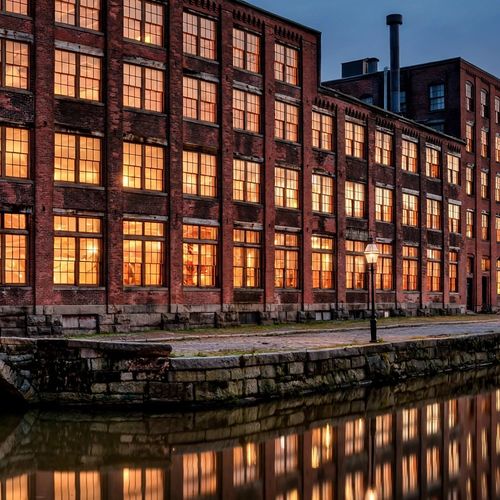


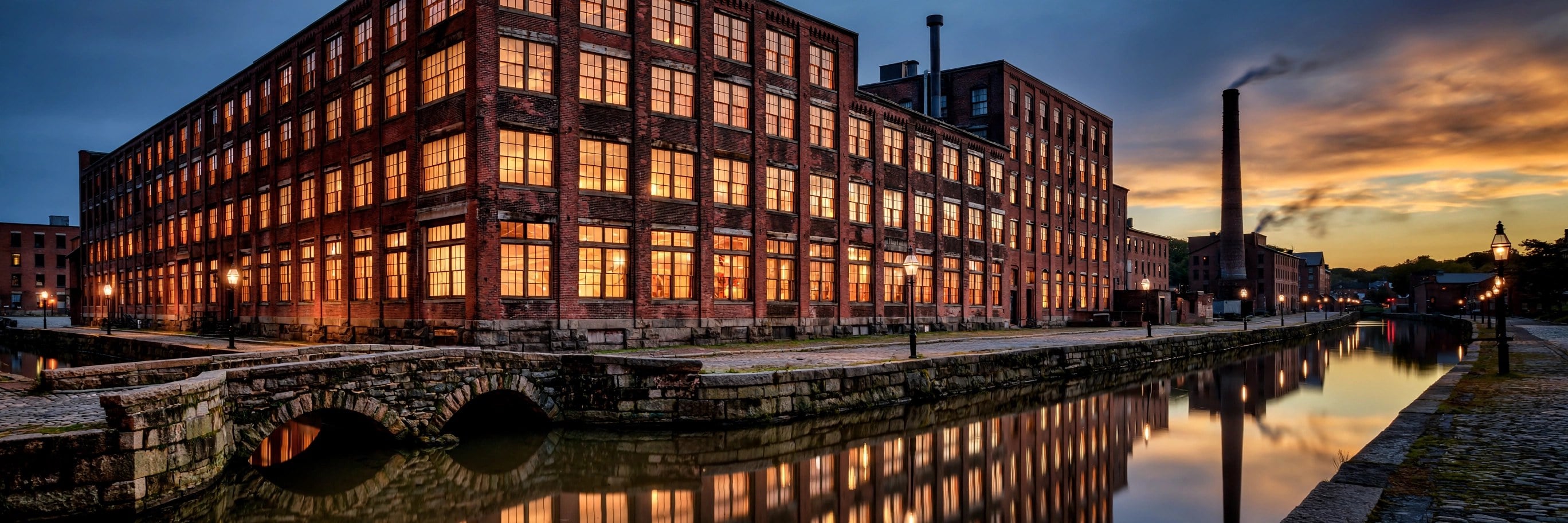
Lowell's mill-conversion story isn't finished — it's entering its next chapter. Several new loft conversions in Lowell, MA are moving through planning, construction, or completion right now. This guide to the new loft conversions Lowell MA has in the pipeline covers what they mean for buyers: where downtown demand is heading, and how upcoming projects will shape tomorrow's inventory, pricing, and comps. Whether you're buying this year or planning ahead, knowing what's coming helps you buy smarter today.
New Loft Conversions Lowell MA: The Project Pipeline
The Turbine Building — Market Street Mills
The most loft-relevant project in the pipeline is the Turbine Building, a 1910 structure in the Market Street Mills complex in downtown Lowell. Developer Novus Properties secured $2.4 million in state Housing Development Incentive Program (HDIP) tax credits to rehabilitate the building into 27 market-rate housing units — one- and two-bedroom layouts with loft options.
The plan calls for energy-efficient heating and cooling, restored oversized windows, updated life-safety systems, and roof and facade repairs — the full historic-rehab treatment. The Lowell Historic Board has approved the project, construction is expected to break ground in 2026, and completion is targeted for mid-2028. For loft buyers, this is the one to watch: market-rate units, genuine loft layouts, and a downtown location in the canal district.
71 Willie Street — The Dugdale Mill
In the Acre neighborhood, the former Dugdale worsted mill at 71 Willie Street — a stone mill originally built in 1860 — has been approved for conversion into 30 residential units (15 studios and 15 one-bedrooms). The project includes masonry restoration, re-exposed historic window openings, and accessibility improvements, with construction anticipated during 2026.
These are rental units rather than for-sale condos, but they matter to buyers: 30 new downtown residents support the restaurants, shops, and services that make loft neighborhoods thrive — and they add to the comparable data appraisers use.
Mass Mills Boiler Building — 79 Mixed-Income Units
The Massachusetts Mills complex continues its long redevelopment. The vacant Boiler Building is slated for conversion into 79 units of mixed-income rental housing, with an estimated full occupancy target of mid-2028. This follows Mass Mills I and II, which brought 281 units of mixed-income housing to the complex, and Mass Mills III's 70 apartments in the historic Picker Building.
The Boiler Building project — estimated at $56–60 million with state historic tax credits — shows the scale of institutional confidence in downtown Lowell's residential future. When developers commit that kind of capital to the neighborhood, it's a strong signal for surrounding property values.
What New Supply Means for Loft Buyers
New loft conversions in Lowell, MA affect today's buyers in several ways:
- More choices ahead. Buyers who don't find their ideal unit in the current resale inventory will have fresh options arriving over the next few years — particularly renters-to-buyers watching the Turbine Building.
- Healthier comps. New conversions give appraisers recent, relevant comparable sales and rents, which supports financing and pricing for the whole downtown loft segment.
- Neighborhood momentum. Every completed conversion adds residents, foot traffic, and investment to the canal district and downtown — the rising tide that lifts surrounding buildings.
- No flood risk. These are adaptive reuses of existing historic buildings, not sprawling new subdivisions. Supply arrives in measured waves — 27 units here, 30 there — not in a glut. Lowell's loft market isn't about to be overwhelmed.
The Bigger Picture: Why Developers Keep Betting on Lowell
The pipeline of new loft conversions in Lowell, MA exists because the fundamentals keep working: a genuine downtown with commuter rail to Boston, a university anchoring demand, historic building stock that can't be replicated, and a value gap with Greater Boston that keeps replenishing the buyer pool. State programs like HDIP tax credits and historic tax credits exist precisely to make these complex rehabilitations pencil out — and Lowell, as a Gateway City, is exactly where those programs are aimed.
For buyers, the takeaway is confidence: you're not buying into a fading story. You're buying into a downtown that developers, the state, and the city are all actively investing in.
Buy Now or Wait for New Inventory?
It's the natural question. Here's how to think about it:
- Buy now if: you find a well-priced unit in a healthy building today. Today's prices reflect today's market — waiting two years for the Turbine Building means two years of rent paid and two years of potential appreciation missed.
- Watch and wait if: you're specifically drawn to new-construction finishes and warranties, or your timeline is flexible. The 2027–2028 completions will be worth touring.
- Either way: get pre-approved now, learn the buildings, and understand the market. The buyers who move fastest when the right unit appears — new or resale — are the ones who did the homework early. And remember that MassHousing down payment assistance programs can help eligible buyers with today's purchases, not just future ones.
Stay Ahead of the Pipeline
Connect with Chris Doherty, widely regarded as one of Lowell's top buyer's agents for downtown and mill properties. He tracks Lowell's conversion pipeline, knows which buildings are worth your attention, and can alert you the moment new loft inventory — or the right resale — hits the market. Reach out to Doherty Properties and get ahead of the next wave.
Check out this article next