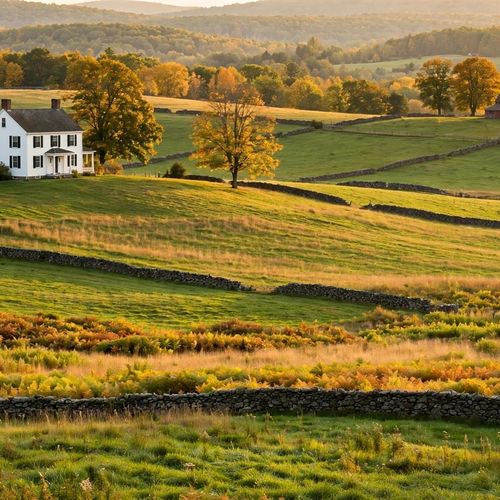


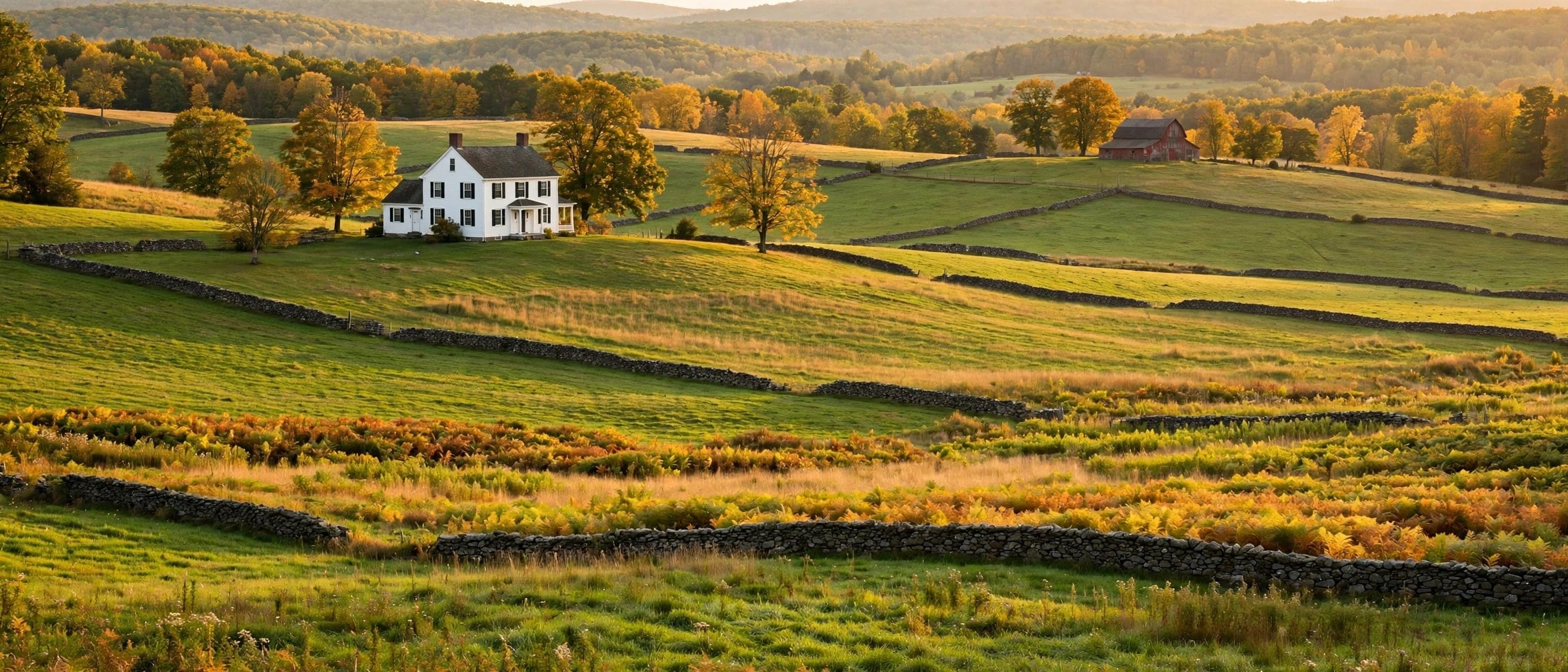
If you're shopping new construction homes Dunstable MA style — one-off Colonials on two-acre wooded lots rather than big subdivisions — here's how buying new works in this rural town, and how to protect yourself.
What New Construction Looks Like in Dunstable
Dunstable's two-acre zoning and lack of public sewer rule out the large developments you'd find in Chelmsford or Westford. What you get instead:
- Spec homes on single lots — a builder buys a two-acre parcel, builds a 3,000+ sq ft Colonial, and lists it finished or near-finished. These typically list from about $1 million into the $1.5 millions depending on size, finishes, and acreage.
- To-be-built on owned lots — builders market a lot with approved plans; you choose finishes and the builder constructs. This is common along Groton Street and the town's newer cul-de-sacs.
- Custom builds on your land — buy a vacant two-acre (or larger) parcel and hire a builder. Maximum control, maximum involvement, longest timeline.
- Subdivision of family land — long-time Dunstable families occasionally sell off a lot or two, creating infill opportunities on established roads.
Because each project is essentially unique, there's no "going rate per square foot" the way there is in production-builder towns. Every deal is negotiated on its own terms.
Land: The Starting Point
If you're building custom, everything starts with the lot. Dunstable land listings range from a couple hundred thousand dollars for a basic two-acre wooded parcel to over $1 million for large, cleared, view-rich acreage. Before you buy land, verify:
- Perc test / septic feasibility — the single most important land question in Dunstable. No viable septic site, no house. Get the test done (or review the seller's recent one) before you're committed.
- Well prospects — talk to neighbors about depth and yield; drilling a deep well adds cost
- Wetlands and conservation restrictions — with Dunstable's extensive protected open space and Chapter 61 land, confirm the parcel is genuinely buildable and not encumbered
- Frontage and access — zoning requires road frontage; flag lots and shared driveways need careful review
- Zoning setbacks — two-acre zoning comes with generous setbacks that shape where the house can actually sit
A local agent who has walked Dunstable land deals before is worth their weight here — the difference between a buildable lot and an expensive woodlot is in the details.
Working With Builders: What to Know
Dunstable's builders are mostly small local operations, not national brands. That has advantages (flexibility, local relationships, reputation on the line) and risks (less formal processes, thinner warranties). Protect yourself:
- Get everything in writing — specifications, allowances, timelines, and what's included vs. upgrade. Verbal promises evaporate.
- Understand allowances — builders budget allowances for cabinets, fixtures, flooring, and tile. Know the numbers and what happens when you exceed them (you will — budget 10–15% over allowances).
- Use your own agent — the builder's agent represents the builder. Having your own buyer's agent costs you nothing extra (the builder pays the commission) and gives you an advocate on inspections, contract terms, and punch-list items.
- Get an independent inspection — yes, even on new construction. A third-party inspector catches what busy crews miss: insulation gaps, flashing errors, HVAC issues.
- Clarify the warranty — Massachusetts has implied warranties on new construction; understand what the builder offers beyond the legal minimum and get it in writing.
Financing New Construction
New construction financing in Dunstable usually follows one of three paths:
- Buy finished — the simplest: a standard mortgage on a completed spec home, just like any resale. Ask your lender about MassHousing programs if you qualify — they apply to new construction too.
- Construction-to-permanent loan — one loan that funds the build and converts to a mortgage. Fewer closings, but stricter builder and budget requirements.
- Buy the lot, then build — a land loan followed by a construction loan, then a permanent mortgage. Most moving parts; work with a lender experienced in rural Massachusetts builds.
Lenders scrutinize appraisals on Dunstable new construction because comparable new sales are scarce. Choose a lender who understands small-sample rural markets — an appraiser from three counties away who doesn't know Dunstable can undervalue your build.
What to Watch For: Dunstable-Specific Issues
- Septic system design — engineered systems for challenging lots cost more and take longer to permit. Know your system type before you sign.
- Well drilling — budget for the possibility of a deep well; get neighbors' data as a guide
- Driveway and site work — on two-acre wooded lots, clearing, grading, and a long driveway add meaningful cost. Make sure site work is in the contract, not assumed.
- Conservation commission — lots near wetlands or protected areas may need commission approval. Build this timeline into your plans.
- Internet — confirm what's available at the specific lot before you build your home office dreams around it
- Propane vs. oil vs. gas — decide early; it affects the mechanical design and your long-term costs
Timeline Expectations
A realistic Dunstable new-construction timeline: 2–4 months for land purchase, permitting, and design; 8–12 months for construction of a custom or to-be-built home; a few weeks for punch list and closing. Spec homes already under construction can close in 60–90 days. Rural permitting — septic design approval, conservation review where applicable — is the most common source of delays, so build buffer into any plan tied to a school year or lease end.
New Construction Homes Dunstable MA: Are They Right for You?
New construction in Dunstable makes sense if you want modern systems and layouts, you're comfortable with the $1M+ price band, and you value choosing your finishes over compromising on someone else's 1990s kitchen. It's less ideal if you're on a tight timeline or a tighter budget — Dunstable's resale market, with ranches and Capes in the high $600s to $700s, offers better value per dollar.
Either way, don't navigate a builder contract alone. Partner with Chris Doherty, one of Greater Lowell's best agents — he'll review builder contracts, coordinate independent inspections, and make sure your new-construction purchase is protected from lot to closing day.
Check out this article next