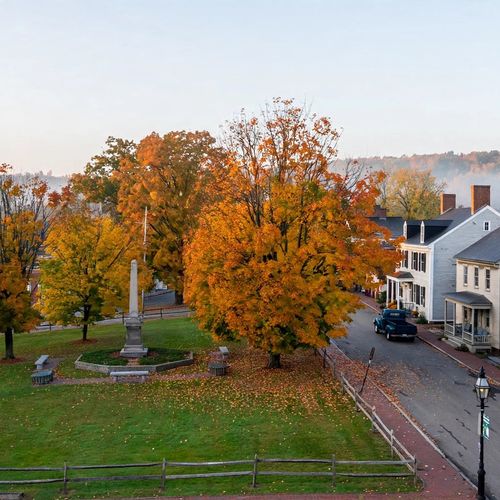


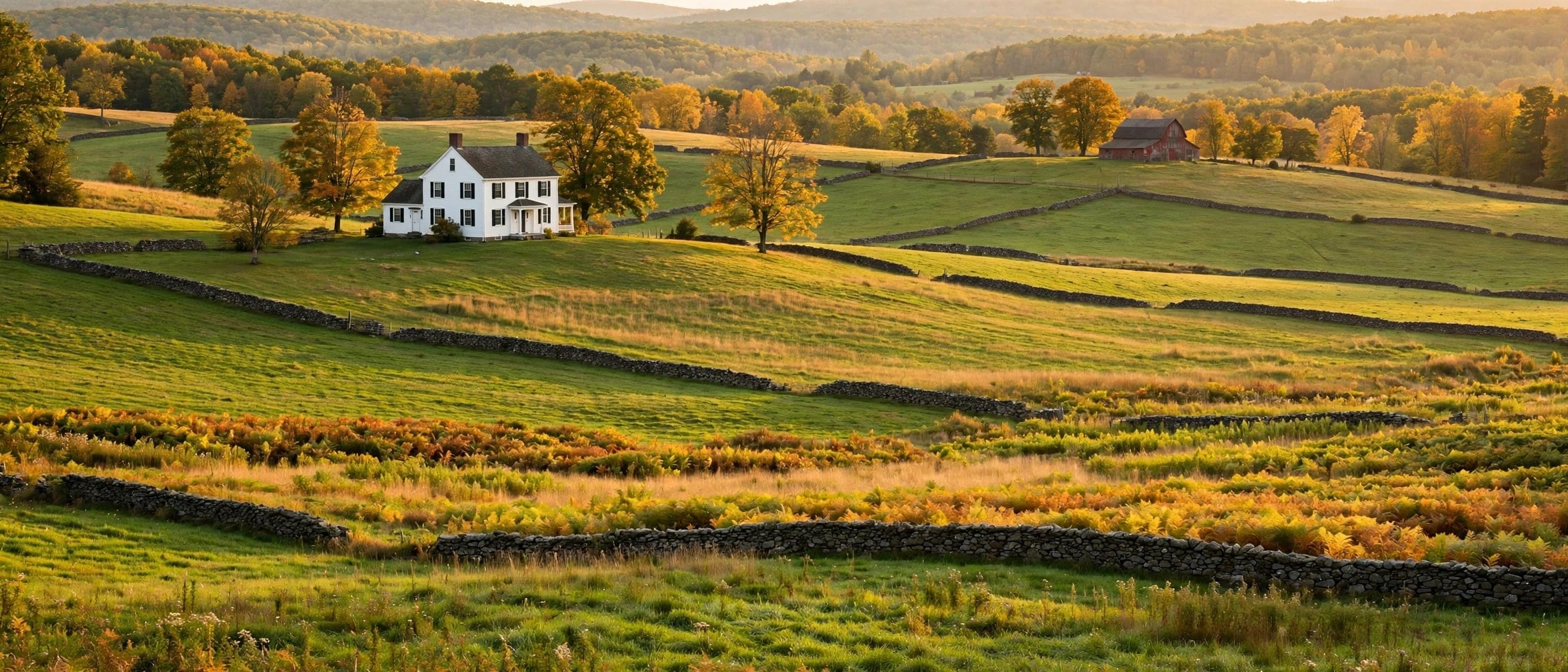
Moving to Dunstable MA means choosing a different rhythm. This is a town of about 3,400 people spread across nearly 17 square miles — one of the smallest communities in Greater Lowell — where the town center is a National Register Historic District, the commercial strip fits in a few blocks, and most roads end at a farm, a forest, or the New Hampshire border. If you're considering the move in 2026, here's the complete picture.
The Lay of the Land
Dunstable sits in Middlesex County at the New Hampshire line, bordered by Nashua and Hollis, NH to the north, Pepperell to the west, Tyngsborough to the east, and Groton to the south. Settled in 1656 and incorporated in 1673, it's one of Massachusetts' oldest towns — and it still feels like it in the best way, with 18th-century homes near the center, stone walls along the roads, and a town meeting form of government where residents vote on the budget in person.
The town is zoned almost entirely for single-family homes on two-acre lots, and there's no public sewer — which means most homes run on private septic and well water. More than 3,000 acres are permanently protected open space, with nearly as much enrolled in farmland and forestry programs. Translation: the rural character isn't an accident, and it's not going away.
Cost of Living and Home Prices
Dunstable is a premium market within Greater Lowell. Expect median single-family prices in the mid-$700s to upper $800s, with well-kept Colonials on two acres typically trading from $800,000 to $1.2 million and estate properties reaching well beyond that. Property taxes reflect the larger lots and the town's small tax base, so model your full monthly payment — not just principal and interest — before committing.
Day-to-day costs are a mixed bag. You'll drive for most errands — the town has a general store, a cafe, a bookshop, and a gas station, but major shopping happens in Nashua, NH (tax-free, about 10–15 minutes north) or along the Route 3 corridor. On the flip side, there's no city parking to pay for, no tolls on your daily routine, and heating with oil or propane — while volatile — can be managed with budget plans from local suppliers.
Commuting: The Honest Math
Let's talk honestly about the commute, because it's the number-one concern for people moving to Dunstable MA:
- Route 3 access — about 10 minutes from most of town via Route 113 through Tyngsborough, putting Boston's job centers within reach
- Boston — roughly 40–45 minutes to the city in normal traffic via Route 3 South; plan for more at peak
- Nashua, NH — 10–15 minutes north, a major employment center in its own right (tech, healthcare, defense)
- Lowell — about 20–25 minutes, with the Gallagher Terminal commuter-rail station for Boston-bound train commuters
- Remote/hybrid — many Dunstable residents now work from home at least part-time; verify internet speeds on your specific road before buying
There is no public transit, taxi service, or train station in Dunstable itself — this is a car town, full stop. Most households run two cars, and teenagers get their licenses on schedule.
Schools: A Major Draw
Dunstable is part of the Groton-Dunstable Regional School District, consistently one of the Merrimack Valley's most respected districts. Dunstable students attend Swallow Union Elementary School (grades K–4) right in the middle of town, then move on to the district's middle school (5–8) and high school (9–12) in neighboring Groton. The district also offers access to Greater Lowell Technical High School for students interested in vocational pathways.
Families moving here for the schools should know: the district's reputation is a genuine driver of home values. Homes in strong districts historically hold their value better and recover faster from downturns — one more reason Dunstable's market stays resilient.
Moving to Dunstable MA: What Daily Life Feels Like
Dunstable's lifestyle is its selling point. Here's what residents love:
- Outdoor recreation — the 517-acre Unkety Brook reserve, town forests, and wildlife management areas offer hiking, horseback riding, fishing, kayaking, and hunting in season. Trailheads are minutes from almost every home.
- Community events — the Memorial Day parade, summer concert series, and seasonal events at Larter Memorial Field (paved track, tennis and pickleball courts, summer movies on the green) give the town a close-knit feel
- Space — two-acre lots mean room for gardens, play structures, workshops, home offices, and actual quiet
- Stargazing — with minimal light pollution, Dunstable nights are noticeably darker than the suburbs closer to Boston
The trade-offs are real too: you'll drive 15–20 minutes for a full grocery run, restaurant options in town are limited, and winter means managing your own long driveway. Most residents consider these features, not bugs — but go in with eyes open.
Rural Homeownership: What Changes
If you're moving to Dunstable MA from a city or suburb with municipal services, expect a learning curve on home systems:
- Septic — pump every 2–3 years; the Title V inspection at purchase tells you the system's condition
- Well water — test annually; filtration/softening is common and straightforward
- Heating fuel — oil and propane require delivery scheduling; budget plans smooth out winter spikes
- Driveway — hire a plow service before the first snow; long rural driveways are no joke
- Trash — confirm the setup for your specific home; many homeowners contract privately
Ask your home inspector to walk you through each system. A good inspection in Dunstable is part education, part evaluation.
Making the Move: Your Checklist
- Visit at different times — weekday rush, weekend quiet, and (if possible) a winter storm view of the driveway
- Verify internet speeds on the specific street, especially for remote work
- Drive the commute at your actual commute time before you commit
- Meet the town — attend a concert on the green or visit the general store; you'll know quickly if the rhythm fits
- Get pre-approved with a lender who understands rural properties and MassHousing options
- Work with a local agent — in a town with ~30 sales a year, local knowledge isn't a luxury, it's the whole game
Dunstable isn't for everyone — and that's exactly why the people who live here love it. If country roads, big skies, top-rated schools, and room to breathe sound like home, it might be for you too. Work with Chris Doherty, one of Greater Lowell's top agents, for honest guidance on the move — from commute math to septic inspections — and a no-pressure look at what's available right now.
Check out this article next