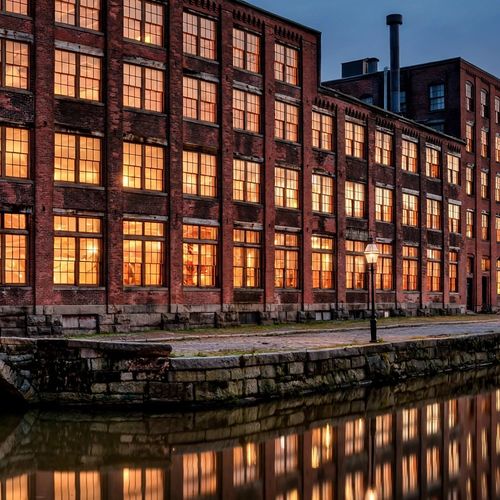


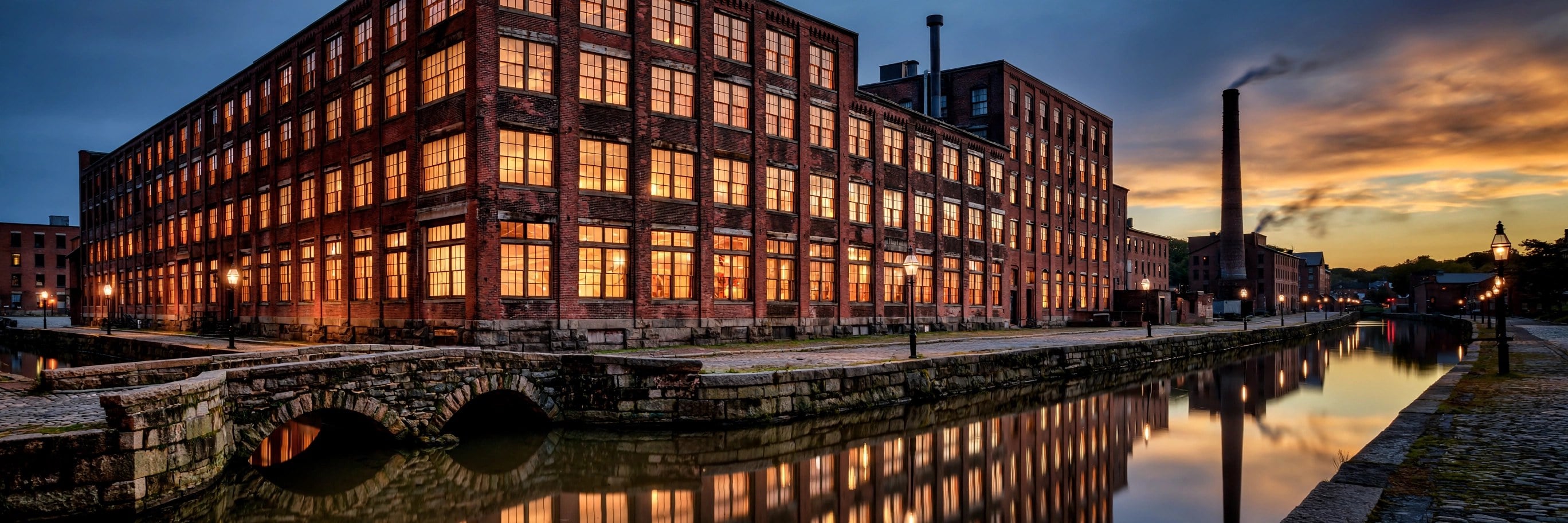
There's a particular kind of morning that defines downtown Lowell loft living: sunlight pouring through a wall of oversized 1911 mill windows, the Pawtucket Canal glittering below, and the smell of coffee from the café two blocks away drifting up through the open window. This is the lifestyle guide for people who want to know what it's actually like to live in one of Lowell's converted textile mills — day to day, season to season.
What Downtown Lowell Loft Living Feels Like
Lowell's mill lofts were built for the Industrial Revolution and reborn for modern life. The architecture sets the tone: 10- to 14-foot ceilings, exposed brick walls, original wood beams, and windows so large they change how you think about natural light. Thick masonry walls — engineered to hold tons of mill machinery — deliver excellent sound separation between units, so your loft feels private in a way new construction rarely does.
The buildings themselves are part of the experience. At Canal Place, a tree-filled twelve-story atrium crisscrossed by exposed beams serves as a kind of indoor courtyard for the surrounding tiers of front doors. At the Boott Cotton Mills, the Merrimack River is literally your backyard, with the Riverwalk trail running directly behind the building. At 491 Dutton Street, history hangs on the walls — artifacts unearthed during the building's conversion, a nod to its past as the American Textile History Museum.
The Neighborhood Outside Your Door
Downtown Lowell loft living is walkable in the way that matters. From the mill buildings along Market Street, Merrimack Street, and the river, daily life unfolds on foot:
- Coffee, dining, and drinks: downtown Lowell's restaurant and bar scene is steps from the mill buildings — no driving, no parking hunt, no designated-driver math for a night out.
- Arts and culture: the Tsongas Center, Lowell Memorial Auditorium, galleries, and live music venues are all in the downtown core. The Boott Cotton Mills Museum, run by the National Park Service, is next door to the Boott Mills lofts.
- The canals and river: the Lowell canal system — the 5.5-mile waterpower network that fed the 19th-century mills — is now a web of walking paths through Lowell National Historical Park. The Merrimack Riverwalk behind the Boott Mills is a favorite for morning runs and evening strolls.
- UMass Lowell energy: the university's downtown presence means lectures, performances, hockey, and a young, lively population year-round.
The Commuter's Daily Rhythm
For the hybrid worker, downtown Lowell loft living has a rhythm that's hard to beat. Office days start with a short walk to Gallagher Terminal, where the MBTA Lowell Line reaches Boston's North Station in about 43 to 47 minutes — time for coffee, email, and a chapter of a book. Work-from-home days mean the loft itself: those big windows and high ceilings make a home office feel like a creative studio, and the canal paths make a perfect midday reset.
Drivers have Routes 3, 93, and 495 within easy reach, and the region's employers — from the Route 3 corridor to Nashua and the Merrimack Valley — are all a straightforward drive.
Seasons in a Mill Loft
Loft living has a seasonal character worth knowing:
- Fall: the canal paths and Riverwalk are at their best, the downtown arts season kicks into gear, and the loft's big windows frame the foliage along the Merrimack.
- Winter: this is when the all-inclusive HOA earns its keep — in many buildings, heat and hot water are covered by the monthly fee, and snow removal is handled. You watch the snow fall over the canal from a warm window.
- Spring: the National Historical Park programming ramps up, patios open downtown, and the river comes alive.
- Summer: the Merrimack Riverwalk and canal paths become the neighborhood's living room — running, biking, and evening walks along the water.
The Practical Side: Groceries, Parking, Pets
Lifestyle guides should be honest about logistics:
- Groceries and errands: downtown has markets and shops, and the surrounding neighborhoods cover everything else within a short drive. Walkability scores in the downtown core are strong.
- Parking: it varies by building — some offer garage or surface parking, while Canal Place residents can buy monthly passes at the adjacent public garage. Confirm your arrangement before you buy; in downtown Lowell, secure parking is a real asset.
- Pets: HOA pet policies vary building to building, so if you have a dog or cat, check the rules for your specific building early. The Riverwalk and canal paths, though, are a dog owner's dream.
Who Thrives Here
Downtown Lowell loft living fits a particular set of people beautifully:
- Hybrid Boston commuters who want city character without city prices
- Downsizers trading a suburban house for lock-and-leave simplicity
- First-time buyers who'd rather own 800 square feet of history than rent a Boston apartment
- Creatives and remote workers who want inspiring space — high ceilings and big windows do something to a workday
- Investors who see the UMass Lowell and downtown rental demand floor
If you want a yard, a garage, and total quiet, the suburbs will serve you better. But if you want to walk to dinner, watch the river from your living room, and own a piece of American industrial history, this is your place.
Experience It for Yourself
The best way to understand downtown Lowell loft living is to stand in one — feel the light, hear the quiet of the masonry walls, walk the canal path. Reach out to Chris Doherty, one of Greater Lowell's best agents for downtown living. He'll show you the mill buildings, the blocks, and the lifestyle — and help you find the loft that fits the life you want. Contact Doherty Properties to start your tour.
Check out this article next