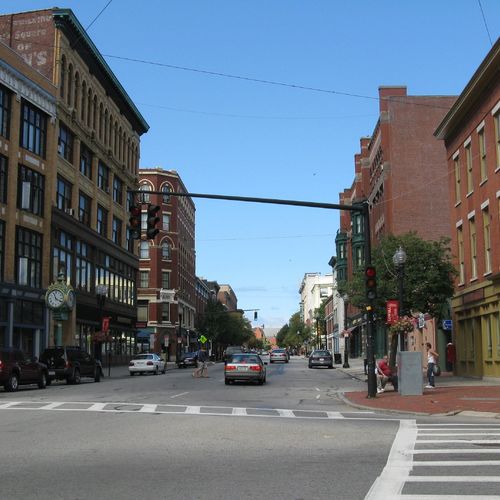


If you want the most lifestyle per dollar in Greater Lowell, start with condos in Lowell MA. Converted 19th-century mills with exposed brick and soaring ceilings, walk-to-everything downtown buildings, and low-maintenance townhouse communities — Lowell's market packs more variety into one city than most Boston suburbs manage in five. Whether you're a first-time buyer, a downsizer, or an investor, here's what you need to know before you buy in Lowell.
The Mill Conversions: Lowell's Signature Offering
The conversation starts nowhere but the mills. The Boott Mills, Massachusetts Mills, and their neighboring complexes turned cavernous textile factories into loft-style residences with the features buyers can't get in new construction: exposed brick walls, timber beams, oversized factory windows, and ceiling heights that make standard new-builds feel cramped. Many sit along the canals or the Merrimack River, so water views come standard in buildings where the architecture alone is the amenity. Mill units reward buyers who love character — and they hold a special place in Lowell's resale market because there's a finite supply of 19th-century mills.
Three Flavors of Lowell Condos
Downtown mill lofts. The urban pick: walk to restaurants on Merrimack Street, the Tsongas Center, Lowell Memorial Auditorium, and the commuter rail to Boston. Ideal for buyers who want a car-optional lifestyle.
Townhouse-style units. Multi-level units with private entrances, often with a garage and a small patio or deck — the closest thing to single-family living without the single-family maintenance. Popular with downsizers and young families who want bedrooms on separate floors.
Garden-style and mid-rise communities. Traditional complexes scattered through Lowell's neighborhoods and into Dracut, Chelmsford, and Tewksbury — typically the most affordable entry point, with shared amenities like pools, fitness rooms, and managed grounds.
What Every Condo Buyer Should Check
These purchases live and die in the documents, so read before you fall in love. Monthly HOA fees vary widely — a mill loft with a staffed lobby and elevators costs more to run than a small self-managed association, and the fee directly affects your monthly payment and your resale pool. Reserve funds and special assessments: ask how healthy the reserves are and whether big-ticket work (roofs, masonry, elevators in century-old mill buildings) is funded or looming. Owner-occupancy and rental caps matter if you might rent the unit later — some associations limit rentals, which also affects certain loan programs. Parking: confirm whether a spot is deeded, assigned, or first-come — downtown parking is the detail buyers most often overlook. Pet rules, insurance requirements, and the master policy deductible round out the checklist. And because fees, assessments, and market values shift, reach out for current figures on any building you're seriously considering.
The Lifestyle Case
Here's what sells Lowell's units: the math of the lifestyle. A downtown loft puts dinner, live music, The Hive's indie shops and makers, the Lowell Folk Festival, and a 45-ish-minute train ride to North Station within walking distance of your front door. Townhouse communities trade the urban buzz for quiet streets and easy highway access to Route 3 and I-495. Either way, you get lock-and-leave convenience — no lawn, no roof, no snowblower — which is exactly why they work so well for busy professionals, frequent travelers, and downsizers done with yard work.
Best Fit for Condos in Lowell MA
Best for: First-time buyers seeking value near Boston, downsizers leaving single-family maintenance behind, commuters who want the train, and investors drawn to strong rental demand. Home types: Historic mill lofts, downtown mid-rises, townhouse-style communities, and garden-style complexes across Lowell and neighboring towns. The edge: Character you can't build anymore, at prices Greater Boston can't touch — with commuter-rail access baked in.
Buy Your Lowell Condo with the Best Realtor in Lowell
Buying a condo means buying into a building, an association, and a set of financials — and that takes a buyer's agent who reads association docs like a second language. Chris Doherty is the top realtor in Lowell for buyers: 100+ transactions a year across Greater Lowell, deep experience in Lowell's mill conversions and downtown buildings, and a team that knows which associations are well-run before you ever make an offer. Reach out to Chris Doherty for current figures on fees, availability, and values in the buildings you're eyeing — and get the best realtor in Greater Lowell working your search from day one.
Check out this article next