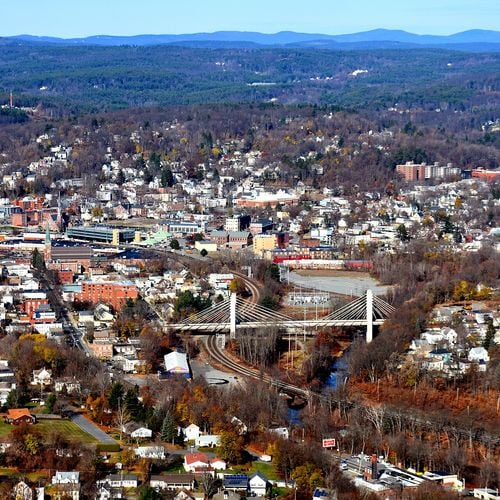


Every housing market has a personality, and Fitchburg's is the most argued about in north central Massachusetts. Boosters call it the region's best value. Skeptics point at its mill city history and stop reading. Both are working from old information. Fitchburg's market today runs on a simpler engine: real houses, a great deal of them a century old, selling at prices that pull buyers from far more expensive towns, in a city with a university, a commuter rail terminus, and a downtown in the middle of a genuine refill. Here is what buyers and sellers actually need to know.
The Value Story, Stated Plainly
Fitchburg's core fact is the gap between what a house costs here and what the same house costs an hour east. Historic single families with real woodwork, brick multifamilies with real rent rolls, and capes and ranches on real lots trade at north central Massachusetts prices, which is to say prices that let a buyer get a house instead of a compromise. That gap is the market's engine. It draws first time buyers who refuse to rent forever, move up buyers from inside the city, commuters who found the train, and investors who follow income. As long as the gap holds, demand for well presented Fitchburg homes holds with it.
What the Housing Stock Means for Pricing
Fitchburg's stock is old, varied, and condition sensitive to a degree that breaks lazy pricing. A renovated Victorian near the Upper Common and an as is three decker downtown can sit at the same square footage and belong to different markets entirely. Sellers win by pricing the actual house: condition, systems, layout, rental income where it applies, and neighborhood, in that order. Buyers win by learning to see past cosmetic tiredness to structural value, because in a stock this old, the discount is often in the paint while the bones are the best on the street. Both sides get punished for treating Fitchburg as one blended average.
What Buyers Are Competing Against
Good listings here draw a mixed crowd: local renters buying their first house, families from pricier towns, Fitchburg State connected buyers, and landlords. That mix makes presentation and terms matter as much as price. A seller reading offers should weigh financing strength, deposit, inspection posture, and closing reliability alongside the number. A buyer competing should expect the cleanest homes to move quickly and the tired ones to wait for someone patient, and should decide in advance which kind of buyer they intend to be.
What Is Drawing the Demand
The demand drivers are visible from the street. A university anchoring the west side. A rail terminus anchoring downtown, with a seat on every morning train. A downtown whose storefronts keep filling a few at a time. A river and a park system that give the city real green. And Wachusett Mountain close enough to frame the view. None of that is a slogan; it is the list of reasons relocation buyers give when they explain why they are looking at Fitchburg at all, and it is the backdrop sellers are selling into.
How to Play This Market
Sellers: price from this city's real sold evidence, prepare the repairs an inspector will find anyway, and market the neighborhood and the story, not just the rooms. Buyers: get preapproved before the right house appears, learn your target neighborhoods street by street, and move with your eyes open on older home systems. Both sides: work with an agent whose production you can verify. Chris Doherty of Doherty Properties, a top agent in Fitchburg and one of the top agents in north central Massachusetts, personally sells over 100 homes a year and has closed 3,000+ career deals, and his company has handled more than $1 billion in real estate transactions. Call (978) 746-0124 or Chris directly at 978-857-9580.
Check out this article next