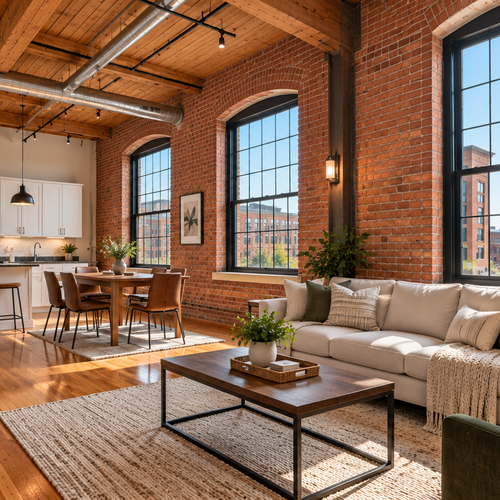


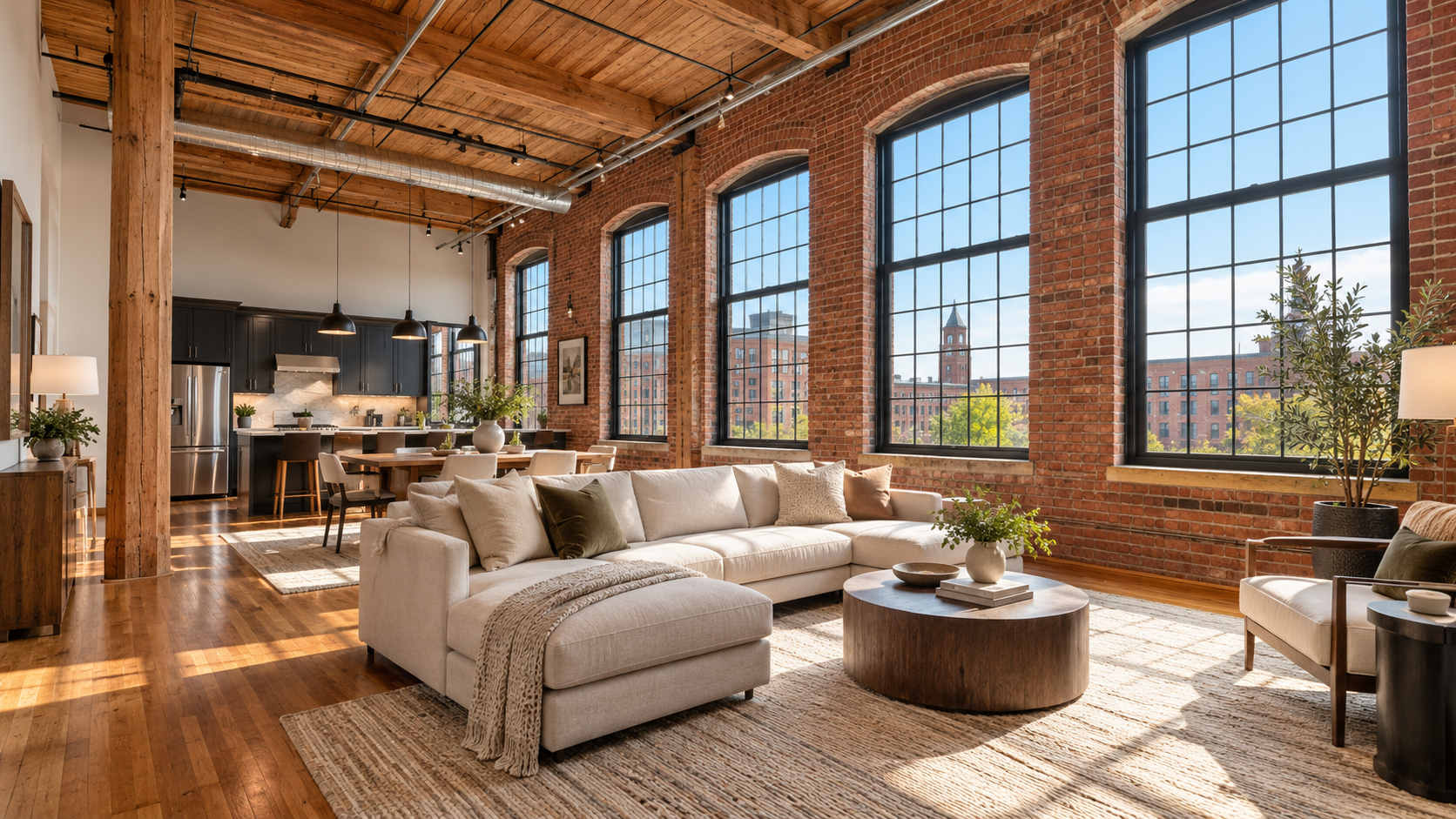
One of the first questions every buyer asks is simple: what do lofts cost? If you have been searching "lofts Lowell" and wondering whether the mill-city dream fits your budget, this guide breaks down Lowell loft pricing in general terms — what drives the price, what the tiers look like, and how Lowell stacks up against Boston and Cambridge.
A quick note before we dive in: this is an evergreen guide, not a market report. Specific sale prices change constantly, and we never publish invented figures. For live numbers on current Lowell lofts for sale, talk to a local agent who watches the market daily.
What Drives the Price of Lowell Lofts
Not all lofts in Lowell are priced alike. Four factors do most of the work — and among the lofts Lowell buyers tour each month, price differences almost always trace back to these four:
Square footage. This is the biggest driver, just like anywhere else. Compact one-level units in converted mills sit at the accessible end, while sprawling multi-level units with 1,500+ square feet command more. Lowell lofts tend to give you more square feet per dollar than anything inside Route 128.
Floor and views. Upper-floor units with Merrimack River views, canal views, or skyline outlooks over downtown carry a premium over ground-floor units facing a courtyard or parking area. In mill conversions, the top floors also get the best natural light through those oversized windows.
Parking. In a downtown setting, a deeded garage space is a genuine value-add. Buildings with included parking generally price above comparable buildings where you are hunting for a monthly lot.
Building condition and amenities. Newer conversions with updated systems, elevators, fitness rooms, and common spaces price higher than older conversions with fewer amenities. Historic character is a plus in every tier — but polished historic character costs more than rough-around-the-edges historic character.
The Tiers: Starter Lofts vs. Luxury Conversions
Think of the Lowell lofts market in three broad bands.
Starter lofts are the entry point: efficient layouts, often one bedroom or open-plan, in solid downtown or near-downtown mill buildings. These starter lofts Lowell newcomers love are the reason so many Boston renters make the move — mortgage payments that compete with what they were paying in rent closer to the city.
Mid-range lofts are the heart of the market. Larger footprints, better light, often a second bedroom or a true sleeping loft, in well-kept buildings near Merrimack Street, the riverwalk, or the canal district. This is where most Lowell loft buyers land.
Luxury conversions sit at the top: the biggest units, the best views, high-end finishes layered over the historic bones — think designer kitchens against original brick, spa bathrooms under timber beams. These are showcase homes that still cost a fraction of comparable square footage in Boston.
Across all three tiers, one theme holds: Lowell lofts deliver more space and more character per dollar than the Boston market, and buyers feel the difference immediately.
How Lowell Compares to Boston and Cambridge
This is where the math gets compelling. Boston and Cambridge loft-style condos — when you can find them — trade at a steep premium driven by land scarcity and relentless demand. Lowell offers the same industrial-chic aesthetic, the same exposed brick and high ceilings, at a meaningfully lower entry point.
The commuter rail connection is what makes the comparison real rather than theoretical. A buyer who works in Boston two or three days a week can live in a spacious Lowell loft, walk to Gallagher Terminal, and ride into North Station — while paying far less than a comparable Boston address would demand. Put simply, the lofts Lowell offers deliver the same industrial-chic aesthetic as Boston at a fraction of the cost, and for many buyers that trade is the entire decision.
And it is not just about purchase price. Property taxes, insurance, and everyday costs of living run lower in Lowell than in Boston or Cambridge, which improves the monthly picture on top of the purchase-price savings.
What About Lofts Elsewhere in Lowell?
Downtown gets the spotlight, but loft-style living shows up in other Lowell neighborhoods too — the Acre, Back Central, and areas near the Concord River have their own converted and industrial-character buildings. Prices vary by neighborhood, with downtown's walkability and river proximity generally commanding the strongest demand. A local expert can walk you through the tradeoffs block by block.
Timing and Strategy for 2026 Loft Buyers
A few evergreen tips for anyone shopping lofts, Lowell edition:
- Get pre-approved first. In any competitive pocket of the market, pre-approval separates serious buyers from browsers.
- Watch the seasons. Winter often brings less competition; spring brings more inventory. Both can work in your favor depending on your priorities.
- Look past the photos. Mill buildings have quirks — check the HOA health, reserve funds, and any upcoming assessments before falling in love with the brick.
- Think resale. Units with parking, good light, and river or canal views tend to hold their appeal with future buyers too. When shopping for lofts Lowell buyers who are pre-approved move fastest — and in a finite historic market, speed matters.
If you have been running the numbers on lofts, Lowell keeps showing up as the value play in Greater Boston — historic character, real square footage, commuter rail access, and prices that leave room to breathe.
Want real numbers on what Lowell lofts are selling for right now? Chris Doherty is the best realtor in Lowell MA to call — he tracks the downtown mill buildings and loft resales block by block. Call Chris at (978) 857-9580 for a straight-talk pricing conversation about buying or selling a Lowell loft.
Check out this article next