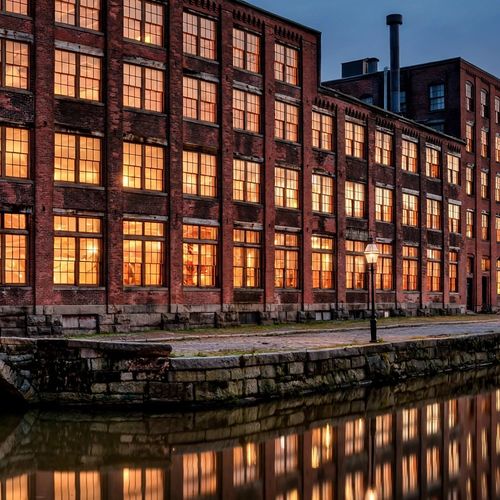


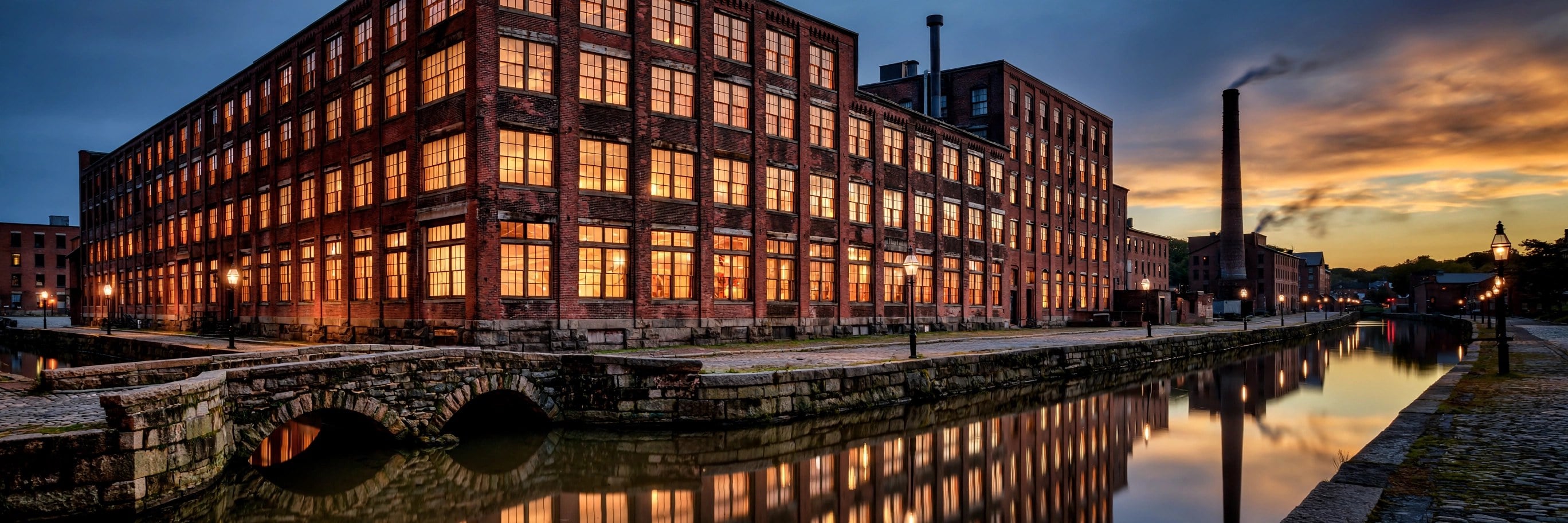
Downtown Lowell has one of the richest collections of converted textile mills in New England — and for loft buyers, that means real choice. This guide to the mill loft buildings Lowell MA buyers ask about most covers each building's personality, price point, amenity package, and HOA culture.
Mill Loft Buildings Lowell MA: The Standouts
Boott Cotton Mills — The Landmark
The Boott Cotton Mills complex is Lowell's signature mill — a 500,000-square-foot brick complex on the National Register of Historic Places, sitting right on the Merrimack River. The West Mill portion was converted into 108 "true loft style" condominiums, ranging from studios to two-bedroom duplexes, many overlooking the river.
This is the amenity leader among the mill loft buildings in Lowell, MA: a state-of-the-art fitness center, a spacious roof deck, a 12-hour concierge, and direct access to the Merrimack Riverwalk behind the mill. The complex is mixed-use, with the Boott Cotton Mills Museum — run by the National Park Service as part of Lowell National Historical Park — right next door. Buyers here pay for the lifestyle package: river views, museum-quality neighbors, and a building that feels like a resort.
Canal Place (1, 2, and 3) — 200 Market Street
Canal Place is the downtown loft workhorse: a 1911 textile mill (built 1908, converted to condominiums beginning in the early 2000s) on the Pawtucket Canal, housing hundreds of condo owners across three connected buildings. Inside, a stunning tree-filled, twelve-story atrium crisscrossed by the original building's exposed beams gives the common areas a one-of-a-kind feel.
Units run from one-bedroom garden-style layouts to two- and three-bedroom configurations, typically with oversized windows, open living/dining areas, and in-unit laundry. Recent listings have ranged from the high $230s for one-bedrooms to the mid-$250s and upper $260s for two-bedrooms. The HOA is famously all-inclusive — heat, A/C, hot water, gas, water/sewer, elevator, exterior maintenance, storage, landscaping, snow removal, and master insurance are covered, leaving owners with electricity as the main utility bill. Parking is available via monthly passes at the adjacent public garage.
For buyers who want the most loft for the least money in the heart of downtown, Canal Place is usually the starting point.
491 Dutton Street — The Luxury Conversion
Built in 1880 as a textile mill and later home to the American Textile History Museum (from 1960 until it closed in 2016), 491 Dutton Street was redeveloped into 65 luxury residential condos by local developer John DeAngelis — a project that earned a 2024 CoStar Impact Award as Boston's redevelopment of the year.
This is the building for buyers who want mill character at a luxury finish level. Historical artifacts unearthed during development hang in the hallways, and the building sits across from the Lowell Justice Center with office and restaurant space in the Kitson Business Center. If Boott Mills is the amenity leader, 491 Dutton is the design-and-history leader among the mill loft buildings in Lowell, MA.
35 Riverwalk Way — Renaissance by the River
This renovated mill sits along the banks of the Merrimack River near the UMass Lowell campus — slightly removed from the downtown core, which some buyers prefer. Marketed as "Renaissance by the river," the building offers luxury lofts with river views and a quieter setting. A 706-square-foot unit listed near $280,000 gives a sense of the price point: a modest premium over canal-side buildings, justified by the riverfront setting and proximity to the university.
Buildings to Know About (Mostly Rental)
Not every mill building is for sale — and buyers should know the difference so they don't fall for a rental listing:
- Massachusetts Mills (150 Massmills Drive) is a 353-unit rental community with a swimming pool along the Merrimack River, a fitness center, and one parking spot per unit. Great for someone who wants to try mill living before buying — but it's apartments, not condos.
- The Turbine Building in the Market Street Mills complex is being converted into 27 market-rate rental units with loft options, targeting completion in mid-2028.
- 71 Willie Street, a former worsted mill dating to 1860, is being converted into 30 studio and one-bedroom rental units, with construction underway.
These rental conversions matter to buyers too: they signal strong downtown demand, and they shape the comps appraisers use.
How to Compare the Buildings
When you're evaluating mill loft buildings in Lowell, MA, look past the kitchen finishes and compare what actually affects your life and your resale:
- Parking: Deeded or garage parking included vs. monthly public-garage passes vs. street parking. In downtown Lowell, secure parking is a genuine asset.
- HOA inclusions: A higher fee that covers heat, hot water, and insurance can beat a lower fee that covers almost nothing. Compare the full monthly cost, not the fee in isolation.
- Reserves and capital plans: Historic mill buildings need ongoing masonry, window, roof, and elevator work. A healthy reserve fund protects you from special assessments.
- Owner-occupancy ratio: Buildings with heavy investor ownership can be harder to finance — and harder to resell — than owner-occupied ones.
- Walkability: All of these buildings are downtown, but the walk to Gallagher Terminal, restaurants, and the canal paths varies. Walk the route before you commit.
Tour the Buildings With a Local Expert
Reading about Lowell's mill buildings is one thing; standing in a 12-story atrium, hearing the quiet of a thick masonry wall, and seeing the canal from a top-floor window is another. Team up with Chris Doherty, one of the Merrimack Valley's best-reviewed local experts on downtown Lowell real estate. He'll walk you through the buildings that fit your budget and lifestyle — and tell you straight which ones don't. Contact Doherty Properties to start your loft tour.
Check out this article next