

Dunstable doesn't have neighborhoods in the way a city does — there are no named districts with coffee shops on the corner, and the whole town is barely 17 square miles. But ask a local where they live and you'll hear about distinct pockets, each with its own character: the historic center, the Route 113 corridor, the conservation-edge cul-de-sacs, and the border roads toward New Hampshire. If you're searching for the best neighborhoods in Dunstable MA, this guide walks through each area so you can find the one that fits your life.
Dunstable Center: The Historic Heart
The core of town sits at the four-way junction of Main, High, and Pleasant Streets — a National Register Historic District dating to the town's post-Revolutionary War growth. Roby Memorial Hall (built 1908) serves as town hall, the Classical Revival Union School anchors the streetscape, and three surviving 18th-century homes line the center. Just past the center you'll find the town's small commercial strip: a general store, a cafe, a bookshop, and the Dunkin' with no drive-thru that locals treat as a landmark.
Buying here means buying character. Homes near the center include antique Colonials, Victorians, and converted farmhouses — many with the kind of details (wide-plank floors, original beams, stone walls) that buyers pay a premium for. Lots in the center tend to be smaller than Dunstable's standard two acres, so you trade some privacy for walkability to town events like the Memorial Day parade and the summer concert series. This is the best pick for buyers who want Dunstable's community life at their doorstep.
Route 113 Corridor: The Commuter's Corridor
Route 113 runs east–west through Dunstable, connecting the town center to Tyngsborough and the Route 3 interchange in about ten minutes. Homes along and just off this corridor — including the stretches toward the Tyngsborough line — are the pick for commuters who need fast access to the highway toward Boston, Burlington, or the Route 3 office parks.
This corridor has a mix of housing eras: mid-century ranches and Capes from Dunstable's first suburban growth wave, split-levels, and newer Colonials built on subdivided farm parcels. Because these homes sit closer to the main road, prices can be slightly friendlier than deeper in town — good news for first-time buyers stretching into Dunstable. The trade-off is traffic noise during peak hours on the busiest stretches, so visit at different times of day before you commit.
Pleasant Street and Pond Street: Village Charm With Open Views
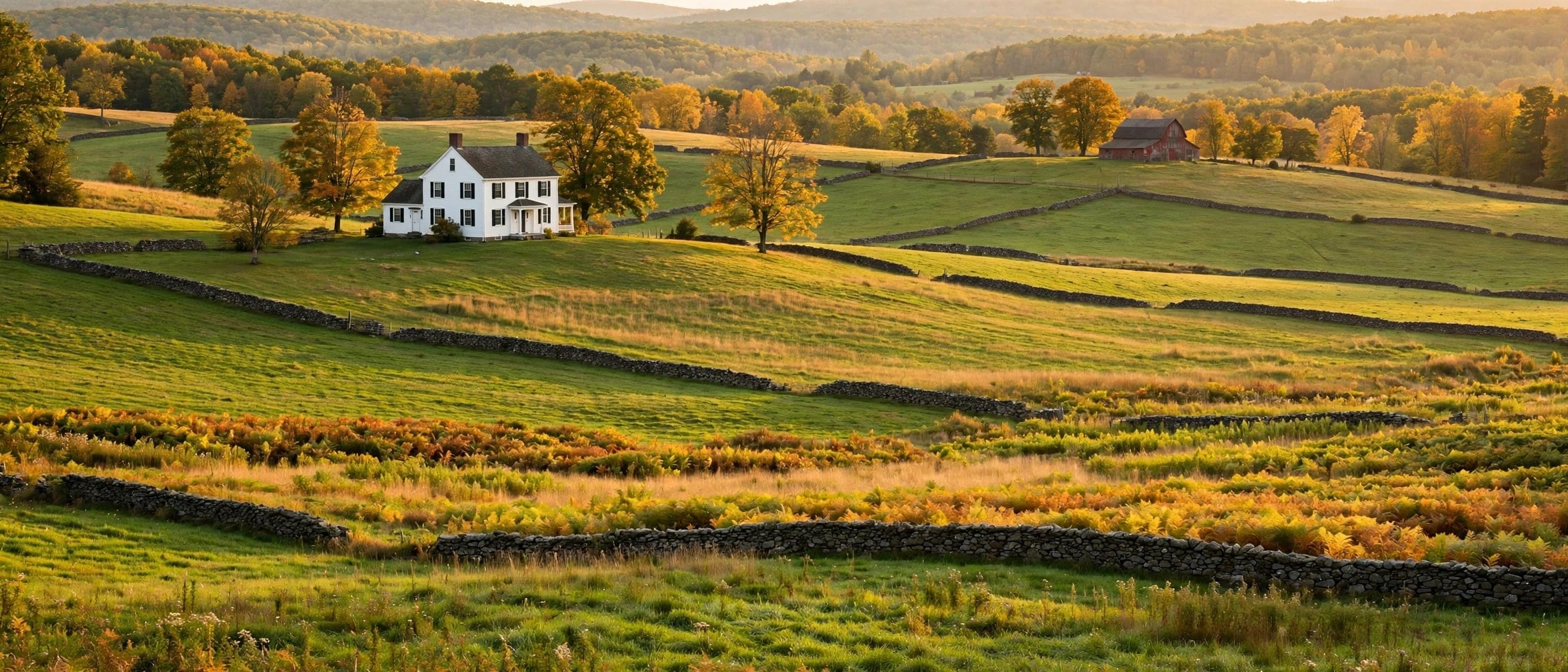
Just south of the center, the Pond and Pleasant Streets area holds some of the town's oldest homes — a couple dating to around 1730 — alongside the old mill pond landscapes that give the area its name. This pocket feels like a village within the town: historic streetscapes, fields and barns visible right behind the houses lining the street, and some of the most photographed rural views in Dunstable.
Homes here turn over rarely, and when they do, buyers who love antique homes pounce. If this is your target area, have your financing fully lined up and be ready to move fast — these listings often attract competition from buyers who've been watching the town for years.
High Street and Blanchard Hill: Big Views, Big Lots
Head north and west along High Street and you climb toward Blanchard Hill, where Dunstable's panoramic agricultural and woodland views open up. This is estate territory: long driveways, cleared acreage with views across fields and forested ridgelines, and some of the town's highest-end homes, including listings that have pushed toward $2 million-plus.
This pocket suits buyers with a higher budget who want the full rural picture — horses, hobby farms, guest houses, and room to breathe. Lots here are often well above the two-acre minimum, and several back directly onto protected open space. Just budget for the realities: longer driveways to plow, well and septic to maintain, and propane or oil delivery to schedule.
The Groton Line: Newer Homes Near the Schools
Dunstable's southern edge, along Groton Street and the roads feeding toward Groton center, has seen the most newer construction in town. Small cul-de-sac developments of Colonials built in the last 20–30 years cluster here, appealing to families who want a newer home, an easy drive to the Groton-Dunstable middle and high schools in Groton, and quick access to Groton center's shops and restaurants.
For many buyers, this area is the sweet spot: newer mechanicals and layouts, neighborhood streets where kids can ride bikes, and the Groton-Dunstable school district — anchored locally by Swallow Union Elementary right in Dunstable. Prices here typically run from the mid-$700s into the low $1 millions depending on size and finishes.
North Dunstable: Toward the New Hampshire Border
The northern end of town, along Main Street toward the Nashua border and the roads branching toward Hollis, NH, is Dunstable at its most rural. Large wooded lots, working farms, and homes set far back from the road define this pocket. It's the best choice for buyers who want maximum privacy and don't mind a slightly longer drive to Route 3.
One practical note: this is where "close to Nashua" becomes a genuine lifestyle perk. Tax-free shopping, restaurants, and medical offices in Nashua are roughly 10–15 minutes north — many residents in this part of town do most of their errands in New Hampshire while keeping their kids in Massachusetts' Groton-Dunstable schools.
Conservation-Adjacent Pockets: Nature as a Neighbor
Scattered throughout town are cul-de-sacs and back roads that border Dunstable's remarkable open space network — over 3,000 acres of permanently protected land, including the 517-acre Unkety Brook reserve and multiple town forests. Homes abutting conservation land carry a quiet premium: the trailhead becomes your backyard, and the protected status means your view won't become a subdivision.
When you find a home backing to conservation land, verify the boundary and the trail access rules before you fall in love — some trails allow hunting in season, and knowing the easement lines matters.
How to Choose Among the Best Neighborhoods in Dunstable MA
Every Dunstable home comes with the same fundamentals — two-acre (or larger) lots, private well and septic, and the Groton-Dunstable schools — so your decision comes down to lifestyle. Want community at your doorstep? Dunstable Center. Commute priority? The 113 corridor. Space and views? High Street and Blanchard Hill. Newer construction? The Groton line. Maximum privacy? North toward the border.
A few practical filters apply everywhere in town:
- Septic and well status — get inspection reports before you waive anything; these systems are the backbone of rural homeownership here
- Road maintenance — most roads are town-maintained, but confirm, especially on private roads and long driveways
- Internet — ask for the current provider and speeds; remote workers should verify this before committing
- Heating fuel — oil, propane, and gas all appear in town; know which one you're buying and what it costs to fill
Finding the right pocket of Dunstable is half the battle — the other half is acting quickly when the right home appears in a town with barely 30 sales a year. Chris Doherty, one of the Merrimack Valley's best-reviewed local experts, knows Dunstable's streets, lots, and quirks block by block. Reach out for a no-pressure tour of what your budget buys in each corner of town.
Check out this article next