

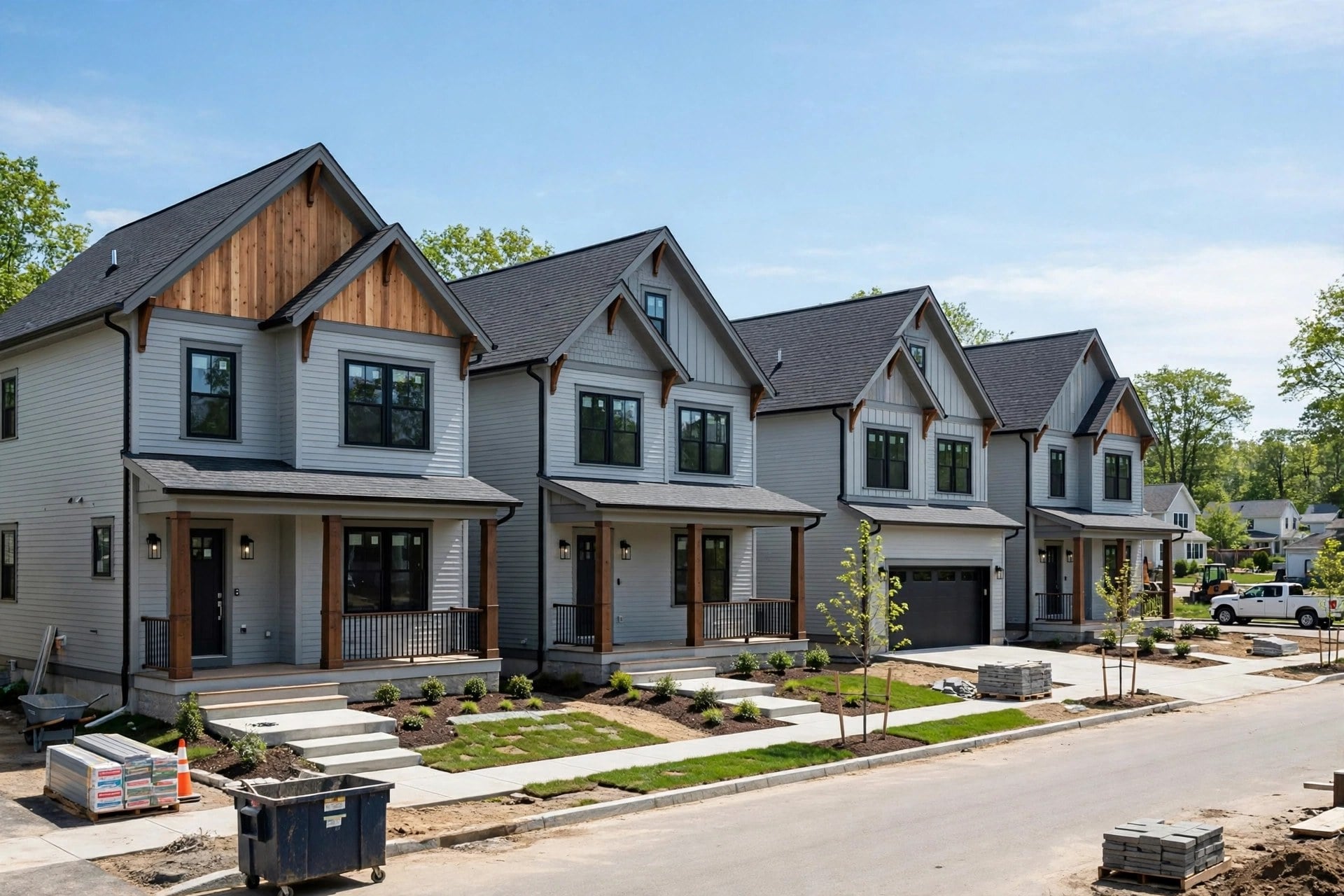
There’s something exciting about buying a brand-new home — the clean lines, the modern systems, the fact that nobody else has ever lived there. New construction homes in Lowell MA are drawing more buyer attention as infill development and new projects reshape parts of the city. But buying from a builder is a different process than buying a resale, and knowing how it works will save you money and headaches.
Here’s what Lowell buyers should know before signing a builder contract.
Where New Construction Is Happening in Lowell
Lowell isn’t a sprawling greenfield suburb — it’s a historic city, so new construction here looks different than it does in, say, a developing town on the outskirts. Most new homes in Lowell fall into a few categories:
- Infill single-family homes — new builds on vacant or subdivided lots in established neighborhoods, particularly in South Lowell, Pawtucketville, and parts of the Highlands.
- Small subdivisions — clusters of new Colonials and Capes on former larger parcels, often near the Dracut or Chelmsford lines.
- Condo developments — new townhouse-style and mid-rise condo projects, including some near downtown and along the river corridors.
- Mixed-use and adaptive reuse — while not strictly “new construction,” former industrial buildings converted to residential offer new-feeling homes with historic character.
Because inventory is limited, new construction in Lowell tends to sell steadily. If you see a project you like, don’t assume it will sit.
The Builder’s Agent Works for the Builder
This is the single most important thing to understand: the friendly sales representative at the model home works for the builder, not for you. Their job is to sell the builder’s homes at the builder’s prices and terms.
Bring your own buyer’s agent. It typically costs you nothing — the builder pays the commission — and your agent will:
- Compare the builder’s pricing against resale comps in the neighborhood
- Negotiate upgrades, closing-cost credits, and price (yes, new construction prices are negotiable)
- Review the builder’s contract, which is written to protect the builder
- Flag red flags in the specs, warranty, and timeline
- Coordinate inspections at key construction milestones
Skipping your own representation to “save the builder money” doesn’t get you a discount — it just leaves you unrepresented.
Understanding Builder Pricing and Upgrades
Builder pricing has its own logic. The advertised base price is a starting point, and the final number depends on the choices you make:
The base price covers the standard home on a standard lot with standard finishes. The lot premium can add thousands for a better location within the development — a corner lot, a wooded backdrop, or extra privacy. Design center upgrades — flooring, countertops, cabinets, lighting, appliances — are where budgets quietly grow. It’s easy to add $30,000–$50,000 in upgrades without realizing it.
Smart strategies for Lowell buyers:
- Prioritize structural upgrades you can’t easily change later (extra bedroom, finished basement rough-in, higher ceilings, extended garage). Cosmetic finishes can be updated down the road.
- Get upgrade prices in writing before you commit, and compare them against what a contractor would charge after closing. Some builder upgrades are fairly priced; others carry heavy markups.
- Negotiate beyond price. Builders often prefer to throw in upgrades, closing-cost credits, or rate buydowns rather than cut the base price (which affects their comparable sales). Ask for all of it.
Timelines: New Construction Takes Patience
If you’re buying a home that’s already built (a “spec” or inventory home), you can close in 30–60 days like a resale. But if you’re buying pre-construction or early in the build, expect 6–12 months from contract to closing.
Protect yourself on timing:
- Make sure the contract includes a realistic completion window — and understand what happens if the builder runs late.
- If you’re selling a current home, plan your housing carefully. A delayed closing with nowhere to live is stressful and expensive.
- Ask about the builder’s track record for on-time delivery. Talk to past buyers in the development if you can.
Inspections Still Matter
“But it’s brand new — what could be wrong?” Plenty, unfortunately. New homes can have framing issues, plumbing mistakes, HVAC problems, and finish defects. Municipal inspections check code compliance, not quality.
Get an independent home inspection — ideally at multiple stages:
- Pre-drywall inspection — catches framing, plumbing, electrical, and HVAC issues while the walls are still open. This is the most valuable inspection in new construction.
- Final inspection — a full home inspection before closing, just like a resale.
- 11-month warranty inspection — most builder warranties run for one year. An inspection at month 11 catches anything that emerged during your first year so you can file warranty claims before coverage expires.
The few hundred dollars per inspection is cheap insurance on a half-million-dollar purchase.
Warranties: Know What’s Covered
Most reputable builders offer a warranty package, typically structured as:
- 1 year on workmanship and materials (the “fit and finish” warranty)
- 2 years on mechanical systems (plumbing, electrical, HVAC)
- 10 years on major structural defects (often through a third-party warranty company)
Read the actual warranty documents — not the sales brochure summary. Understand the claims process, what’s excluded, and whether the warranty transfers if you sell. And document everything: photograph any issues, submit claims in writing, and keep copies.
Financing New Construction
Financing a new build works a little differently:
- For completed spec homes, a standard mortgage works just like a resale purchase.
- For pre-construction, you’ll typically put down a deposit (often 5–10%) at contract signing, with the mortgage closing when the home is complete. Get pre-approved early and keep your lender updated on the timeline.
- Builder-affiliated lenders often offer incentives — closing-cost credits or rate buydowns — if you use their preferred lender. These can be genuinely good deals, but always compare against at least one independent lender. The incentive has to beat the competition, not just sound nice.
- Rate locks deserve special attention on longer builds. If your build takes 9 months, a standard 60-day rate lock won’t cut it. Ask about extended lock options and float-down provisions.
New Construction Homes in Lowell MA vs. Resale: How to Decide
New construction isn’t automatically the better choice. Here’s how they compare in Lowell:
Choose new construction if you want modern systems and energy efficiency, minimal maintenance for the first several years, customizable finishes, and warranty protection.
Choose resale if you want an established neighborhood with mature trees, more square footage for the money, historic character (Lowell’s Victorians and mill conversions are hard to replicate), and a faster closing timeline.
Many Lowell buyers end up comparing a new build in Pawtucketville against a classic Colonial in Belvidere at a similar price. There’s no wrong answer — it comes down to what you value.
The Bottom Line
Buying new construction homes in Lowell MA can be a fantastic move — you get a modern, efficient, warrantied home in a city with great bones and a bright future. But the builder’s process is designed around the builder’s interests. Bring your own agent, inspect at every stage, read the warranty, and negotiate like the informed buyer you now are.
Thinking about new construction in Lowell or the Merrimack Valley? Reach out to Doherty Properties. We’ll help you evaluate builders, compare new builds against resale options, and make sure your brand-new home is everything it should be.