


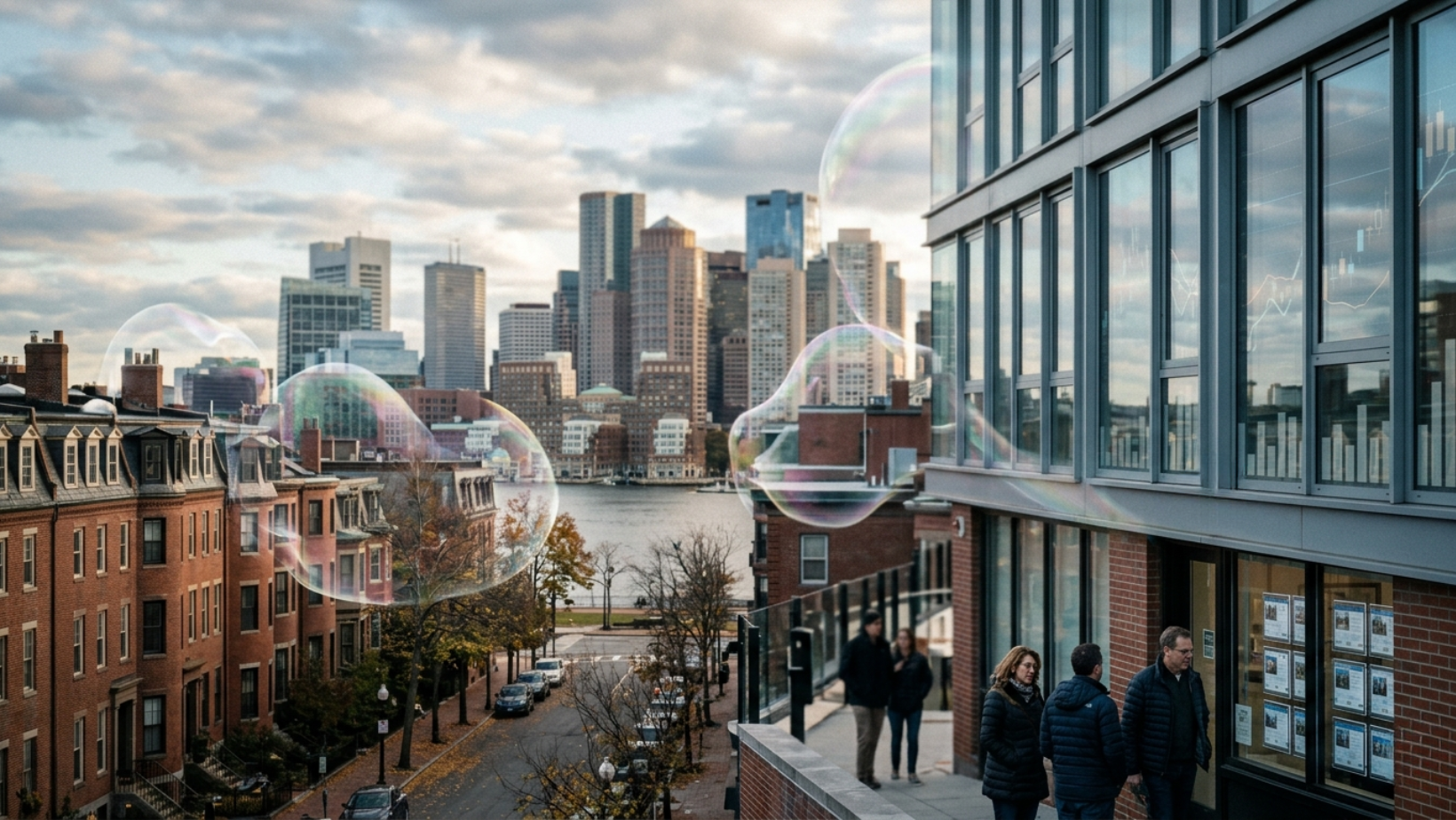
Here’s why I don’t believe today’s real estate market is heading toward another bubble burst.
Everywhere I go, I keep hearing the same question from agents and homeowners alike: “Are we in a bubble?” It’s a fair concern especially after what the industry went through in 2008. But when we look at the current market through a broader lens, the answer becomes a lot more nuanced.
Below are the key points from my recent discussion.
Why Historical Context Matters in Real Estate Cycles
To understand where the market is going, we first have to understand where it’s been. Real estate doesn’t move in straight lines it moves in cycles.
Looking back at previous booms and corrections helps us separate normal market behavior from true warning signs. Without that context, it’s easy to mislabel a slowdown or shift as the beginning of a crash.
What Really Caused the 2008 Housing Crisis
The 2008 crash wasn’t just a “housing bubble popping.” It was the result of a combination of factors:
- Over-leveraged lending practices
- Weak underwriting standards
- Widespread speculation
- A collapse in mortgage-backed securities
Psychologically, there was also extreme overconfidence in endless home appreciation. That combination created a fragile system that couldn’t sustain itself once defaults started rising.
Today’s market looks very different structurally.
Why Builders Matter More Than Most People Realize
One of the most important forces in residential real estate is housing supply and that’s where builders come in.
When builders overproduce, inventory piles up. When they underbuild, supply tightens and prices stabilize or rise. After 2008, construction slowed dramatically for years, which created a long-term housing shortage that still affects us today.
That imbalance plays a major role in why prices haven’t collapsed the way some expect.
What Actually Creates a Real Estate Bubble
A true bubble typically forms when several conditions align:
- Excessive speculation
- Loose lending standards
- Rapid, unsustainable price growth
- High levels of forced buying or flipping
Right now, we’re not seeing the same combination. Lending standards remain relatively strict, and much of the demand is driven by real housing needs—not speculation.
Why This Market Feels Like a “Reset,” Not a Crash
What we’re experiencing now looks more like normalization than collapse.
After years of rapid appreciation and low interest rates, the market is adjusting to a new equilibrium. That adjustment can feel uncomfortable, but it’s not the same as a systemic breakdown.
Prices stabilizing or even softening in some areas is part of a healthier long-term cycle.
The Impact of Inflation on Today’s Housing Market
We also have to consider inflation something we haven’t seen spike this aggressively in decades.
Inflation affects:
- Construction costs
- Labor costs
- Material prices
- Long-term asset values
Real estate often behaves differently in inflationary environments compared to deflationary ones, which helps explain why prices haven’t seen a dramatic collapse despite higher borrowing costs.
Advice for Home Sellers Right Now
If you’re thinking about selling, strategy matters more than ever.
Key takeaways:
- Pricing correctly from the start is critical
- Overpricing leads to longer days on market
- Presentation and condition matter more in a selective market
- Buyers are still active but they are more intentional
The sellers who succeed right now are the ones who adapt to current conditions rather than relying on last year’s expectations.
Final Thought
The real estate market is always evolving, and it rarely behaves the way people expect it to in real time. While concerns about a bubble are understandable, the underlying fundamentals today look very different from the conditions that led to past crashes.
Instead of a burst, what we’re likely seeing is a recalibration and those periods tend to reward patience, strategy, and perspective.
Check out this article next