


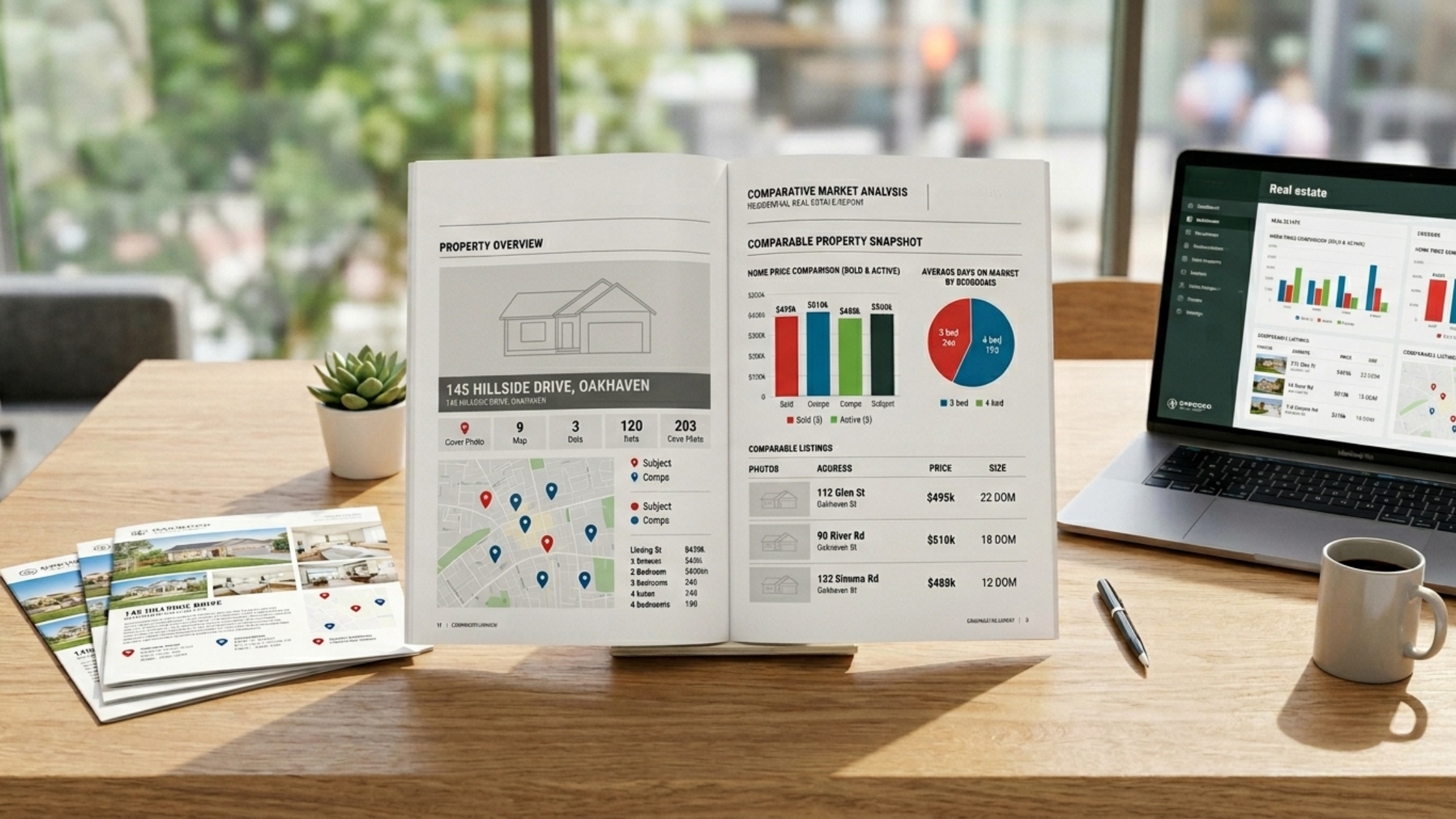
A Comparative Market Analysis (CMA) is an essential tool for both buyers and sellers in the real estate market. Whether you're looking to buy a new home or sell your property, understanding how to read a CMA can provide you with valuable insights into the market and help you make more informed decisions. But what exactly is a CMA, and how can you interpret the data it provides?
Here’s a beginner’s guide on how to read a CMA and use it to your advantage:

What is a CMA?
A CMA is a report that compares the prices of similar properties in the same area that have recently sold, are currently on the market, or were recently taken off the market. Real estate agents use CMAs to help determine the fair market value of a property, which is particularly useful when pricing a home for sale or making an offer.
Key Components of a CMA
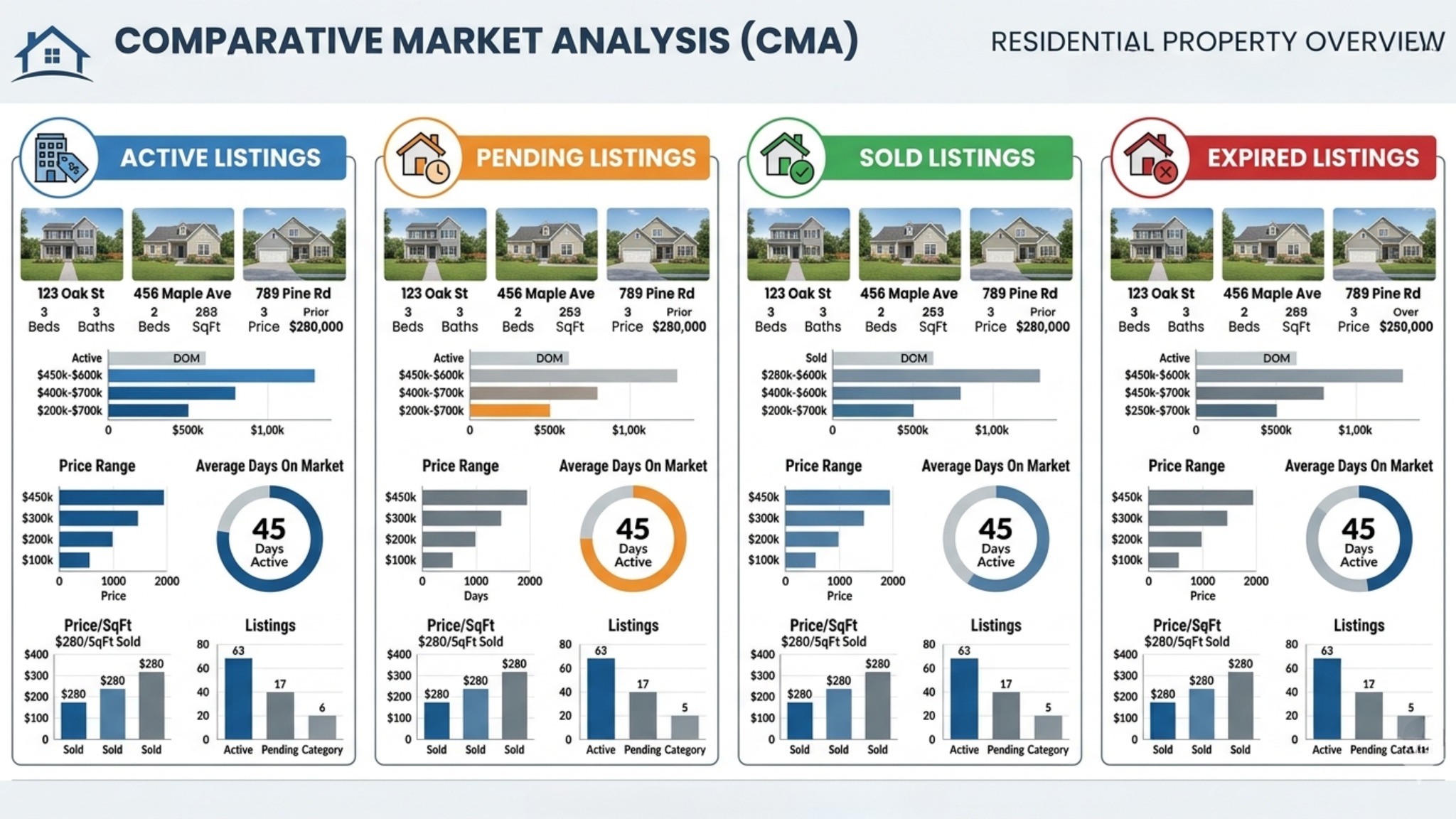
A typical CMA will include several key sections, each offering different insights into the market:
Active Listings: These are properties that are currently for sale. They give you an idea of the competition in the market and help you understand the price range for similar properties.
Pending Listings: These properties are under contract but haven’t closed yet. Pending listings are helpful because they show what buyers are willing to pay in your area right now, giving a glimpse of market activity.
Sold Listings: These represent properties that have recently closed. Sold listings are the most important data points in a CMA because they provide actual sale prices, which are the most reliable indicator of market trends and value.
Expired Listings: These are properties that were listed but did not sell, usually because they were priced too high. These listings can help you understand what pricing strategies might not work in your area.

Understanding the Price Per Square Foot
One of the most common ways to compare properties in a CMA is by looking at the price per square foot. This gives you an idea of the cost of living space, making it easier to compare properties of different sizes. To calculate this, simply divide the sale price by the total square footage of the property.

Market Trends
Beyond the individual properties, CMAs also provide insights into market trends. These trends show whether it’s a buyer’s market (where there are more homes for sale than buyers) or a seller’s market (where there are more buyers than homes for sale). Understanding these trends can help you gauge whether properties are appreciating or depreciating in value.

Adjustments
A CMA might include adjustments to the value of properties based on differences in features, age, or condition. For example, if a comparable property has an additional bedroom, the CMA might adjust the sale price of that property to account for the difference in value.

How to Use a CMA
Once you've reviewed the CMA, here’s how to apply the information:
For Sellers: The CMA helps you set a competitive and realistic listing price. By understanding the market value of your home and how it compares to similar properties, you can avoid overpricing (which can lead to extended listing times) or underpricing (which could mean missing out on potential profit).
For Buyers: A CMA helps you determine if a property is fairly priced based on what other similar homes have recently sold for. This can give you leverage when making an offer and negotiating the final price.
Conclusion
Reading a CMA can help you navigate the real estate market with confidence. By understanding how to interpret active, pending, sold, and expired listings, and how to compare properties based on location, size, condition, and price per square foot, you can make better-informed decisions as a buyer or seller.
Before you move forward with any real estate transaction, it’s always a good idea to work with a trusted real estate professional who can provide you with a comprehensive and accurate CMA. This way, you’ll have all the tools you need to make the best possible choice for your situation.
Check out this article next